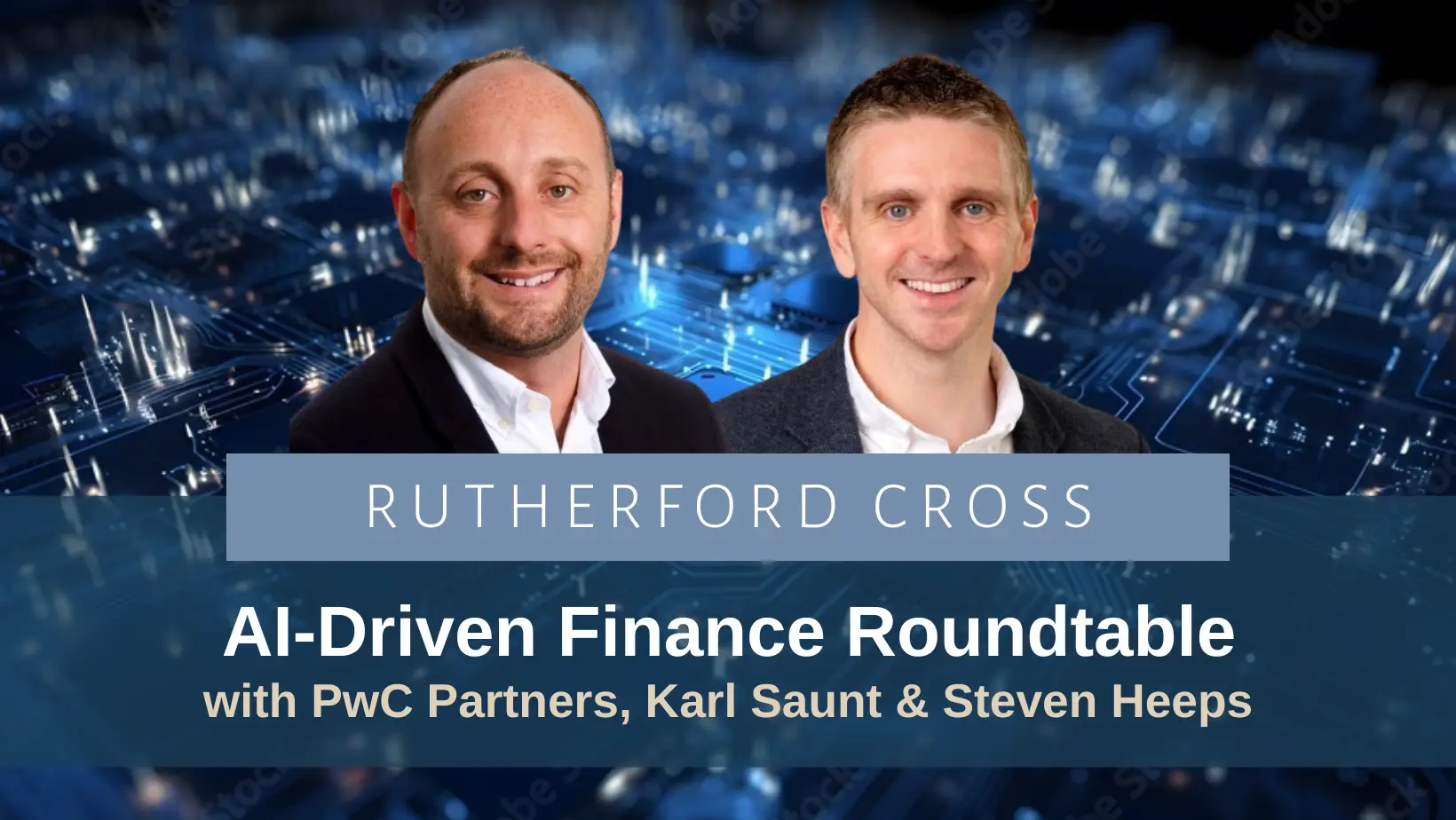
Rutherford Cross Consultant, Jonathan Donnelly, was delighted to host our first AI-Driven Finance Roundtable Lunch on Friday 24th of April, with guest speakers, Steven Heeps and Karl Saunt, Partners at PwC. Rather than drifting into abstract ideas about AI, the discussion stayed rooted in real-world experience, focusing on what is already working, what is holding teams back, and where immediate opportunities lie.
Steven and Karl shared their experience from working with a wide range of businesses at various stages of their journey into AI adoption. There was a strong sense that, while AI can sometimes feel complex or overwhelming, there are straightforward, low-effort ways to drive meaningful progress, if we focus on the right things. Jonathan shares some key takeaways and learnings from the event below.
Building Confidence Through Peer Learning
One idea Karl discussed in detail was pairing up team members who have high AI adoption levels with those who are more sceptical or hesitant. It’s a simple concept, but one with significant potential impact and within our discussion a couple of attendees had already implemented a similar idea.
Rather than relying solely on formal training or top-down initiatives, this approach leans on peer-to-peer learning. Those already using AI effectively can demonstrate real, tangible use cases, showing not just what is possible, but how it fits into day-to-day work. For those less confident, seeing a colleague apply these tools in a relatable context can be far more persuasive than any presentation.
Importantly, this isn’t about forcing adoption; it’s about creating space for curiosity, sharing practical examples, and gradually building confidence. As a low-effort, high-value initiative, this feels like an obvious “quick win” that teams can begin exploring immediately.
Setting the Right Foundations: Purpose Before Technology
Looking beyond short-term wins, the conversation also highlighted the importance of taking a more strategic approach to AI. A key theme here was the need to define clear, purposeful objectives from the outset.
Too often, AI initiatives risk becoming technology-led rather than outcome-led. Without a shared understanding of why AI is being introduced and what success looks like, efforts can quickly become fragmented. This can lead to duplicated work, inconsistent approaches across teams, and, ultimately, resistance from stakeholders who don’t see the value.
By contrast, aligning AI objectives with real business outcomes changes the dynamic entirely. It ensures that everyone involved, from operational teams to leadership, understands the role AI is meant to play and how it supports broader goals.
Equally important is stakeholder buy-in. Involving the right people early in the process helps build ownership and reduces the likelihood of push-back later on. It turns AI from something that is “done to” a team, into something that is co-created with them.
Clearing the Path: Fixing the Fundamentals First
Another strong theme was the importance of “clearing the path” before investing heavily in AI or expensive ERP systems. This idea resonated clearly: AI can only be as effective as the environment it operates in.
Before layering in new technology, organisations need to get the basics right:
- Clean, reliable data that can be trusted and easily accessed
- Streamlined workflows that are well understood and free of unnecessary complexity
- Clear processes that don’t rely on workarounds or tribal knowledge
Without these foundations, AI risks amplifying existing inefficiencies rather than solving them.
There was also recognition that people play a critical role in making AI successful. Ensuring that teams understand how to use AI tools and feel confident doing so, is just as important as the tools themselves. Alongside this, appropriate governance and security measures must be in place to ensure AI is used safely, responsibly, and in line with organisational standards.
Focusing on the Right Problems
A final takeaway was the importance of being selective about where AI is applied. Rather than adopting AI for its own sake, the focus should be on identifying problems where it can genuinely add value. This means asking the right questions upfront:
- Where are the biggest inefficiencies today?
- Which tasks are repetitive, time-consuming, or prone to error?
- Where could better insights drive better decisions?
By targeting these areas, organisations can maximise the return on their AI investments while avoiding unnecessary cost and complexity.
Closing Thoughts
The roundtable reinforced a simple but powerful message: successful AI adoption isn’t about chasing the latest technology, it’s about making thoughtful, practical decisions that align with real business needs.
From pairing colleagues to share knowledge, to defining clear objectives, to strengthening the fundamentals before scaling up, the path forward is as much about people and processes as it is about technology.
Thanks again to everyone who joined and contributed to such an open and constructive discussion, particularly on a rare sunny Friday afternoon. We’re especially grateful to Steven and Karl for sharing their expertise and providing such thought provoking insights.
If you would like to get involved in future Rutherford Cross events, as either a speaker or an attendee, please contact Jonathan Donnelly, or visit our events page for more information: [email protected] | 07494 280 461