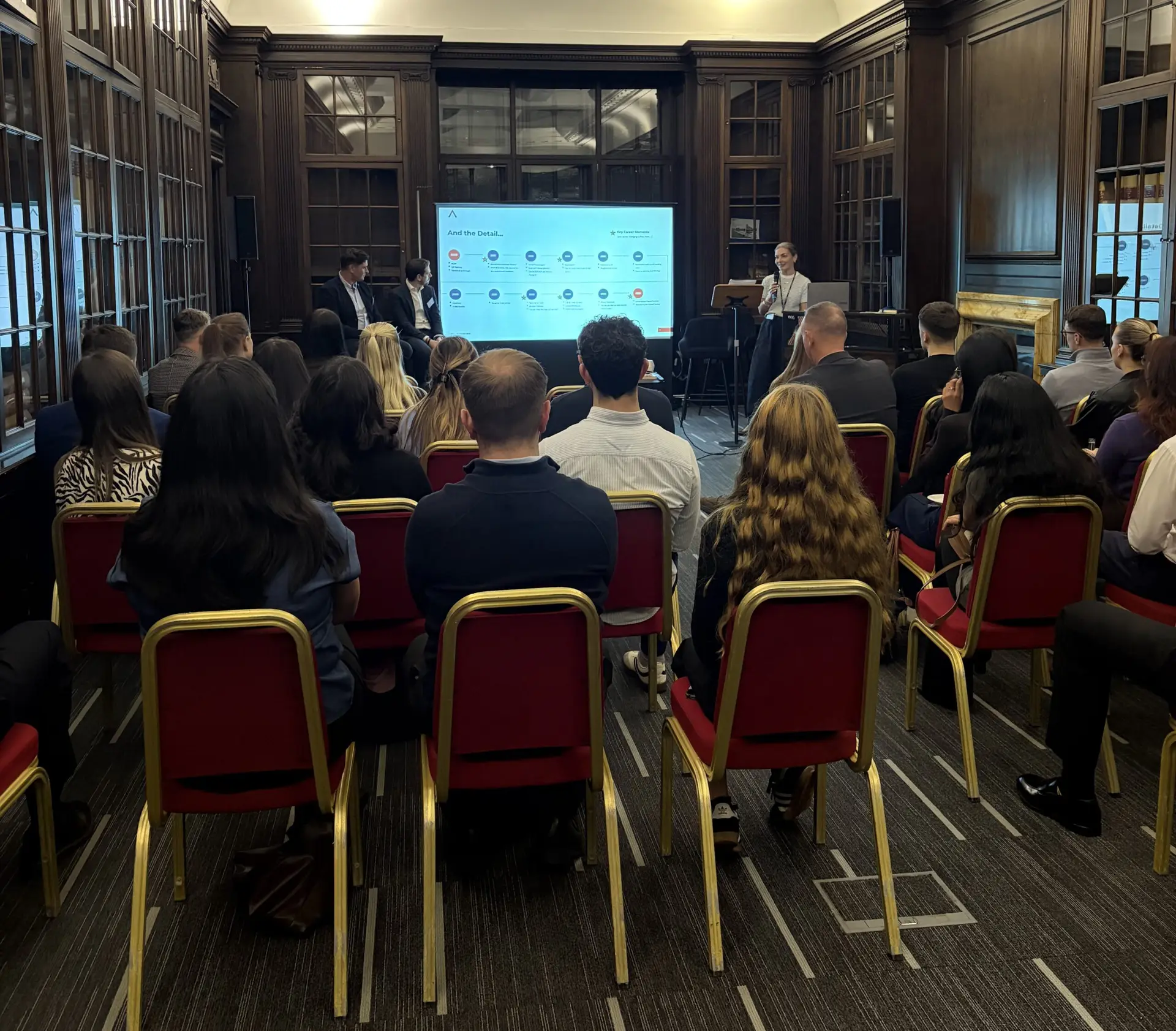
Rutherford Cross Consultant, Ally Deas, recently hosted the latest Planning Your Career Journey event in Glasgow with Jonathan Jones and Nicola Holloway. Drawing on the insights shared throughout the evening, Ally reflects on the career lessons, experiences and advice that resonated most with him.
Last Thursday, I welcomed Jonathan Jones and Nicola Holloway to Glasgow for the latest Planning Your Career Journey event. What I enjoyed most about the discussion was how honest it was. Neither spoke about a perfectly planned career with a clear route from A to B. Instead, they spoke openly about the twists, turns, opportunities and setbacks that shaped where they are today.
A lot of people early in their careers can feel pressure to have everything mapped out. If there was one message from the evening, it was that very few successful careers actually work like that.
Take the Coffee
One thing that really stood out from Nicola’s story was her resilience and willingness to step into the unknown.
Alongside building a successful career in corporate finance, she qualified as a personal trainer during COVID and became a passionate advocate for women’s health. On paper, it might seem unrelated to her day job, but it gave her the confidence to put herself in uncomfortable situations, develop new skills and back herself when opportunities arose.
A theme that ran throughout Nicola’s career was adaptability. Her path wasn’t linear and she was open about the fact that not every move worked out exactly as planned. She shared her experience of leaving Grant Thornton and ultimately returning, something that only happened because she had maintained strong relationships and left on good terms.
What really struck me was how many of her career moves started with a coffee and not an application or a carefully planned career move; a simple conversation over coffee. She was just being curious and seeing where the conversation went. Meeting people, staying connected and being open to opportunities ultimately led to some of the most important roles in her career.
Nicola also spoke about the importance of being known as someone who is hardworking, dependable and enjoyable to work with. People talk about your reputation when you’re not in the room and, over time, those conversations can have a huge impact on the opportunities that come your way.
One of my biggest takeaways from her session was that confidence doesn’t magically appear one day. It comes from repeatedly putting yourself in new situations, taking on challenges and proving to yourself that you’re capable of more than you thought.
Because often the opportunity that changes your career starts with something as simple as a coffee.
Focus on the Destination, Not the Next Title
Jonathan shared some advice he was given early in his career which has clearly stuck with him.
Don’t get too hung up on job titles.
Instead, think about where you ultimately want your career to take you. Whether that’s becoming the FD of an SME, a CFO of a larger organisation, or something else entirely, the question shouldn’t be “Is this the perfect next job?”. It should be “Does this move get me closer to where I want to be?”
Too often people can reject opportunities because the title isn’t quite right. Jonathan’s point was that the exposure, experience and skills you develop are often much more important than what’s written on your email signature.
He also spoke about the importance of positioning yourself for opportunities before they become available. Promotions rarely happen by accident. The people who tend to progress are often those who have already built trust, taken ownership and shown they can operate at the next level.
His advice was simple: volunteer for new things, get involved in projects outside your immediate remit and don’t be afraid to put your hand up. Not everything will be in your job description, but that’s often where the learning happens.
One line that stuck with me was that you should never turn down a job you haven’t been offered. Too many people rule themselves out before exploring an opportunity. Let someone else tell you that you’re not ready.
Beyond technical ability, Jonathan also stressed the importance of emotional intelligence and soft skills. As your career progresses, how you work with people often becomes just as important as what you know.
You earn trust through your work, build credibility through your actions and create opportunities through the impression you leave on others. Over time, that tends to get noticed.
Your Network Already Exists
Both Jonathan and Nicola touched on networking, but not in the way people typically think about it.
Your network isn’t just the people you meet at events; it’s the people you studied with, trained with, worked alongside and worked for.
Many of the people sitting in that room last Thursday will cross paths again at some point during their careers. Future colleagues, future clients, and future employers.
That’s one of the reasons I enjoy running these events. The speakers always provide valuable insights, but the conversations happening around the room before and after the session can be just as important.
Final Thought
The biggest takeaway for me was that there is no single route to success.
Both Jonathan and Nicola have built impressive careers, but neither followed a perfectly straight path. They stayed open to opportunities, worked hard, maintained strong relationships and weren’t afraid to back themselves when something new came along.
A huge thank you to Jonathan and Nicola for sharing their experiences so openly, and to everyone who joined us on the night.
We’ll be back with another PYCJ event in Q1 2027. If you are interested in attending the next event, please get in touch with Ally: [email protected]